Team Group Photography Melbourne: Best Practices for Team Rosters and Sizes
Team group photography sounds simple until you’re on the field at 4:47 pm with changing light, a coach who wants “everyone in the front row,” and players who suddenly remember they need to be at training warm-up two streets away. If you’ve ever tried to photograph a full club, a junior squad, or a sports league round, you learn quickly that the real work happens before the camera even comes out.
In Melbourne, the practical details matter because schedules are tight, venues vary, and the weather can change minute by minute. Whether you’re planning sports team photography Melbourne for a league campaign, or you’re booking a dedicated sports team photographer Melbourne to capture rosters for internal records, you’ll get better outcomes by designing the photo plan around how teams are structured, not just how many people you have.
Below are field-tested best practices for handling team rosters and sizes, from planning and lineup math through to how to keep group photos sharp, balanced, and fair.
Start with roster reality, not spreadsheet neatness
Most rosters look clean on paper. In real life, people shift. Someone joins late after finals, another player is suspended, and a couple of parents ask if their child can be included in the team photo even though they are technically “reserves.” Add travel schedules, jumper numbering differences, and kit changes, and your “exact group size” becomes a moving target.
I usually treat roster planning as two separate tasks: identify the people who must be in the main photo and identify the people who can be covered with a second image. The biggest mistake I see with team group photography Melbourne is forcing one frame to do everything, then accepting the consequences: overcrowding, blocked faces, and a photo that looks uneven even if everyone is standing “where they’re supposed to be.”
A simple, practical approach is to confirm:
- Who is mandatory in the main roster shot (players only, or players plus coaches and officials?)
- Who can be swapped into supporting frames (premiership photos, sponsor boards, or “smaller group” options)
- Whether there are multiple teams under one club banner (for example, seniors and reserves, or mixed age groups)
This avoids the common scenario where the main photo ends up with a few players half-hidden behind taller teammates, or where you end up redoing the shoot because key people were missing.
Choose your photo formats early, then protect them
A lot of clubs want “team photo, individual photos, and sponsor shots,” all in one session. That’s workable, but only if you decide the formats at the start, not during the shoot.
The best results come from choosing a primary team group photo first, then defining secondary images that keep faces visible and maintain consistent spacing. Think of it like staging a play. If you let everything be “whatever fits,” you’ll end up with a frame that is technically captured but visually compromised.
For Sports Team Photos Melbourne and Melbourne Sports Team Photography projects, I often recommend planning three layers:
1) A main group shot for the full roster (or the roster you can realistically fit without sacrificing visibility). 2) A mid-size supporting group shot for subgroups (leaders, positional groups, or cohorts like U16, U14, and so on). 3) A small group or official line shot for coaches, staff, and sponsors, depending on how the club wants to publish images.
When you do this, you can accommodate different roster sizes without creating a chaotic lineup.
The physics of faces: why spacing beats “everyone in one line”
When a group is large, people assume the solution is “more rows.” Rows help, but only if the height difference and camera angle are controlled. Otherwise, the second and third rows become a blur of shoulders and hats, and the faces that matter most are either blocked or turned away.
In practice, I look for spacing that gives each person a clear vertical lane to be seen. That means thinking about:
- body height variety (junior versus adult players)
- whether people wear caps, hoodies, or bulky hair accessories
- the position of the photographer relative to the group (front-facing, slight angle, or side)
- whether the camera is high enough to see over the front row
If your roster includes younger players, you will usually need more vertical planning. Junior sports have smaller bodies, but they also have more movement and less patience during retakes. That can make a single “one-row then we’ll shuffle” plan fall apart fast.
A sports league photography session also adds complexity. Game-day nerves, warm-up routines, and strict ground access times mean you can’t rely on repeated lineup resets. So you need a lineup design that holds up even if you only get one or two Hop over to this website chances to adjust.
How to plan for different roster sizes (without guesswork)
Roster size drives almost every decision: the number of rows, how you place people by height, whether you include coaches, and how you handle late additions. The goal is consistent face visibility and a clean, balanced frame that looks intentional.
Here are common roster scenarios I’ve seen repeatedly across Sports League Photography Melbourne events, and what works best.
- Small rosters (roughly up to 12 people): One or two rows usually does the job. I’d rather you stage a slightly angled group with good spacing than force a straight line where taller people dominate the frame.
- Medium rosters (roughly 13 to 24 people): Two rows often work if the photographer position and camera height are right. Place taller players at the back, shorter players at the front, and watch for gaps that expose empty space rather than faces.
- Large rosters (roughly 25 to 40 people): You’ll often need three rows, but the key is keeping the front row clean and the second row fully visible. This is where lineup discipline matters, especially with players who fidget.
- Very large rosters (more than 40): One “full club” frame can become a wall of bodies. If you must do it, you’ll need strict spacing and sometimes a creative approach like splitting the team into sections and then combining the story with additional images.
The ranges are intentionally broad because venues vary. A wide field gives you options you do not have in a narrow pavilion entrance. Still, the principle holds: the more people you add, the more you should prioritize face visibility over the fantasy of “everyone shoulder-to-shoulder.”
Build fairness into the lineup
Even when everyone is cooperative, group photos can look unfair. The front row naturally draws attention. The tallest player or most photogenic face becomes the focal point. Meanwhile, someone in the middle of the back row looks cut off or partially turned, which leads to complaints, even if the photo was “technically done right.”
To reduce that, I recommend treating lineup order as a fairness problem, not just a logistics problem.
A straightforward method is to sort by height and role. Put those who need to be visible most often in the front and second rows. For example, if the club wants sponsors included, don’t hide sponsor representatives behind shoulders in the middle. If there are team leaders, captains, or award recipients, give them a consistent position that feels earned.
This is also where coaching staff inclusion matters. Some clubs want the photo to reflect leadership visibly, so coaches should have a clear place. Others want a player-only aesthetic. Confirm that early and commit, because shifting during the shoot often leads to people scrambling into spots and turning away from the camera.
Kits, colours, and visual clutter
Uniforms can either elevate a team photo or create visual noise. When you have multiple kit colours, mixed tops, or different training gear, you risk a frame that looks messy even if everyone is perfectly lined up.
Sports team photos in Melbourne often happen outdoors, and lighting is variable. If the team is wearing shiny fabric or very dark uniforms against dark backgrounds, faces can lose contrast. If the background has distracting elements like poles, fences, or other teams in the same frame, you’ll need to position the team strategically.
Here’s what I watch for:
- High-contrast logos that draw the eye away from faces
- Bright sponsor patches near the face area for players in the second row
- Teams where some players wear different shorts or socks, which changes the visual rhythm when the group is viewed as a whole
You don’t have to match every detail perfectly, but you should avoid mixing out-of-kit items in a way that creates patchwork. When practical, align everyone to the same appearance for the team portion.
Timing matters more than people think
Team group photography Melbourne often runs into schedule pressure. If you book too late, you get fatigue, cranky expression changes, and players moving more than you want. If you book too early, you get energy that is all over the place, and that can turn into blinking, laughing, or someone waving to the wrong person.
Light quality is the hidden factor. Overcast days can be perfect, but clear afternoons with strong sun can cause squinting. The workaround is usually adjusting the camera angle and using positioning to reduce direct glare on faces.
For larger squads, you should build buffer time for:
- check-ins for late arrivals
- kit checks for missing numbers or inconsistent clothing
- quick instruction and one organized practice moment
A sports team photographer Melbourne team often works from a “do it once properly” mindset, because repeated resets cost time and patience. That’s why planning and clear communication are part of the job, not extra service.
Communication: your secret weapon on game day
The photo will only look professional if players understand what “ready” means and how long you expect the pose. Poor communication leads to people adjusting their posture mid-capture, changing direction, or talking to each other while you’re trying to get a clean moment.
I’ve found short, specific instructions work better than general ones. Instead of “stand still,” you want something like “feet shoulder-width apart, chin level, eyes on me.” And rather than telling everyone “smile,” you guide the expression: relaxed mouth, eyes open, shoulders back.
You also need one person to manage the group rhythm if you have a big roster. A coach or team manager standing slightly behind the team can help keep players in position while you adjust the photographer’s position.
If you are working with sports league photography Melbourne, you’ll run into overlapping lines, teammates arriving in waves, and officials moving around. Your communication needs to hold the lineup steady in the middle of that activity.
A practical lineup workflow that scales
You can’t improvise a great group photo with 35 people. The solution is a repeatable workflow that adapts to roster size while keeping the core steps consistent.
Here’s a simple, scalable workflow I trust on the day
- Confirm roster and kit appearance quickly, then assign the lineup’s “anchor” positions (captains, coaches, visible leaders).
- Arrange by height, not by jersey number, using rows as needed for visibility.
- Test the camera position with a half-second trial frame, checking that faces in row two and three are not blocked.
- Give one short pose instruction, then capture multiple frames while expressions settle.
- Re-shuffle only if necessary, otherwise move straight to secondary images to protect time and energy.
This process reduces the temptation to keep re-lining everyone up. It also keeps the group focused, because players know what happens next.
Second images are not an afterthought
For medium and large rosters, the “main shot” is rarely the final word. Secondary photos are where you can correct the visual trade-offs you accept in the main frame.
If the full roster is too wide for a clean lineup, you can split into two sections for the main story, then follow with a combined “sponsor and staff” frame for leadership context. If the main photo can only include players, you can still do a separate staff photo that matches how the club likes to archive.
This is especially useful for Melbourne Sports Team Photography where you might deliver images to clubs who use them for multiple purposes: website hero images, social media posts, end-of-season slideshows, and internal recognition.
When you plan secondary images early, you also reduce the sense of disappointment when someone isn’t perfectly visible in the full roster shot. You can offer a follow-up frame where that player has a better view angle.
Backgrounds in Melbourne: plan for what’s behind the team
A team photo lives or dies by the background. Fields are convenient but can be cluttered, and pavilion walls can be too plain if they lack visual depth. In busy venues, other teams might share the same space, and that can create distraction.
When scouting, I think in layers:
- direct background behind the back row
- any poles, signs, or fences that align with heads
- distance to the team, since it affects how much the background blurs
- whether the background supports the team’s colours or fights them
The practical benefit of good background planning is that you can keep the team from looking like they were cut and pasted onto a random location. Sports Team Photographer Melbourne professionals often have the habits to test backgrounds quickly, rather than committing to a location and hoping for the best.
Edge cases that change everything
Some roster situations demand adjustments. You can’t force the same approach across every team, and trying to do so usually creates avoidable problems.
Mixed-age or combined squads
When older and younger players are together, height differences can erase the younger faces if you rely on the wrong row structure. You may need a slight camera angle change or to keep the younger players closer to the front while taller players anchor the back.
Includes referees, officials, or sponsors
This can be visually useful, but only if you treat it like a structured line, not a casual add-on. If you include adults with different height and posture, they can block player faces. You may have to stagger positions.
Late arrivals and “we’ll just squeeze them in”
Squeezing in works only if you have physical space and if the lineup is still balanced. Otherwise, late arrivals change everyone else’s spacing and you end up with uneven faces across the row. Build a plan for a “late pickup” photo instead, even if it is just a quick second frame with the remaining anchors.
Family members or supporters
Some clubs love including a wider group. If you do, you need to treat it as a separate image, because mixing players with non-players often changes how people hold attention. It also complicates consent and privacy expectations, so it’s better handled as an optional separate frame.
What to ask your sports team photographer before booking
A good team photographer will already think about roster size and lineup structure, but it helps to clarify expectations. The best conversations happen when clubs talk about what they want the final images to feel like, not just how many photos they want.
You can ask straightforward questions like:
- How will you handle rosters above a certain size?
- Will you photograph coaches and staff separately or included in the main frame?
- Do you stage a short lineup rehearsal, even for one minute?
- How do you approach visibility for players in row two and three?
This is where Melbourne Sports Team Photography becomes easier to manage. A professional will usually explain how they plan camera position, rows, and timing based on team numbers and venue constraints.
One short guide for clubs: “Decide before you arrive” checklist
- Confirm who is in the main roster shot and who gets a secondary photo.
- Sort by height and role when possible, so lineup becomes faster on arrival.
- Pick the kit look you want for the team photo, including numbering and accessories.
- Identify the background area that won’t include distracting people or objects.
- Schedule buffer time for lineup changes, late arrivals, and one or two expression retakes.
That checklist sounds simple, but it’s the difference between a calm shoot and a frantic scramble where half the faces are turned away.
Deliverables: match the photos to how the club uses them
Many clubs don’t just want one big group photo. They want a set of images that work across multiple channels. If the club posts online, the group photo often needs a clean, wide look. If the club prints a banner, it might need a tighter crop and consistent face visibility.
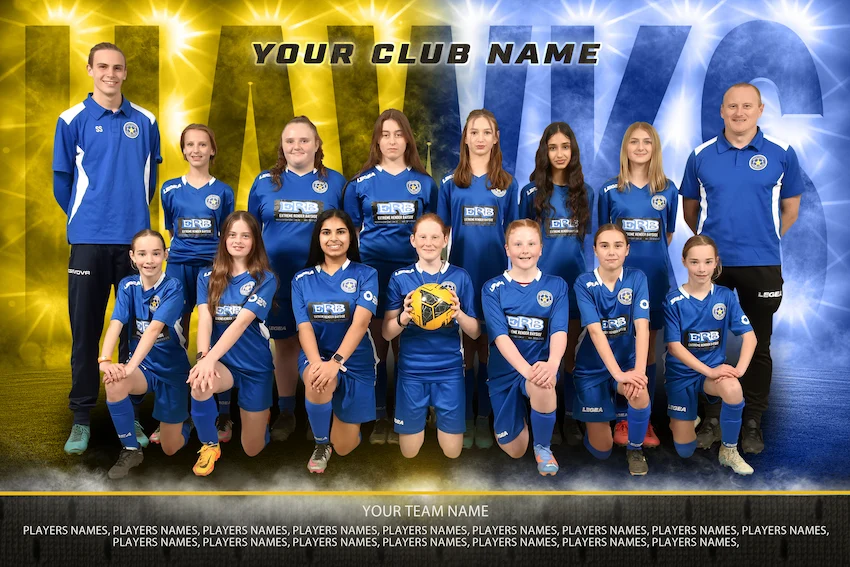
If you’re commissioning Sports Team Photography Melbourne for a season, consider how you will deliver:
- a wide hero image that can stand alone
- crops that highlight coaches, captains, and key players
- supporting group photos for visibility and recognition
This is where planning for roster sizes matters again. If you capture only one overcrowded frame, you end up with limited options for cropping without losing Sports League Photography Melbourne faces.
The real goal: a photo that feels like your team
The best group photos don’t just show everyone present. They show cohesion. People look like they belong together. The expressions are relaxed, the spacing feels intentional, and the lineup tells a story even before you read jersey numbers.
When roster sizes get large, it’s tempting to chase quantity. But from experience, quality increases when you accept that the main photo may be only the core roster, and the rest of the team story can be captured through supporting images with clearer visibility.
That mindset is what separates “we took a team photo” from truly professional Sports League Photography Melbourne work.
Getting it right next time, even when the roster changes again
Teams evolve. Players join after mid-season transfers, injury replacements happen, and clubs move between grades. If you build your photography approach around adaptable roster management, the changes become smaller setbacks instead of full re-shoots.
The best practice is to keep the lineup logic consistent: protect face visibility, plan primary and secondary formats, communicate clearly, and stage the shoot so you are capturing moments, not fixing problems.
If you want, tell me your typical roster range and whether coaches and officials are included. I can suggest a practical lineup plan for your team size and the kind of deliverables clubs usually need for websites and end-of-season publications.
Pure Sport Images
23 Grandview Ave, Mulgrave VIC 3170, Australia
+61 413 157 614
[email protected]
Website: https://puresportimages.com.au